COMMON METADATA ERRORS

Metadata issues that affect channel listings

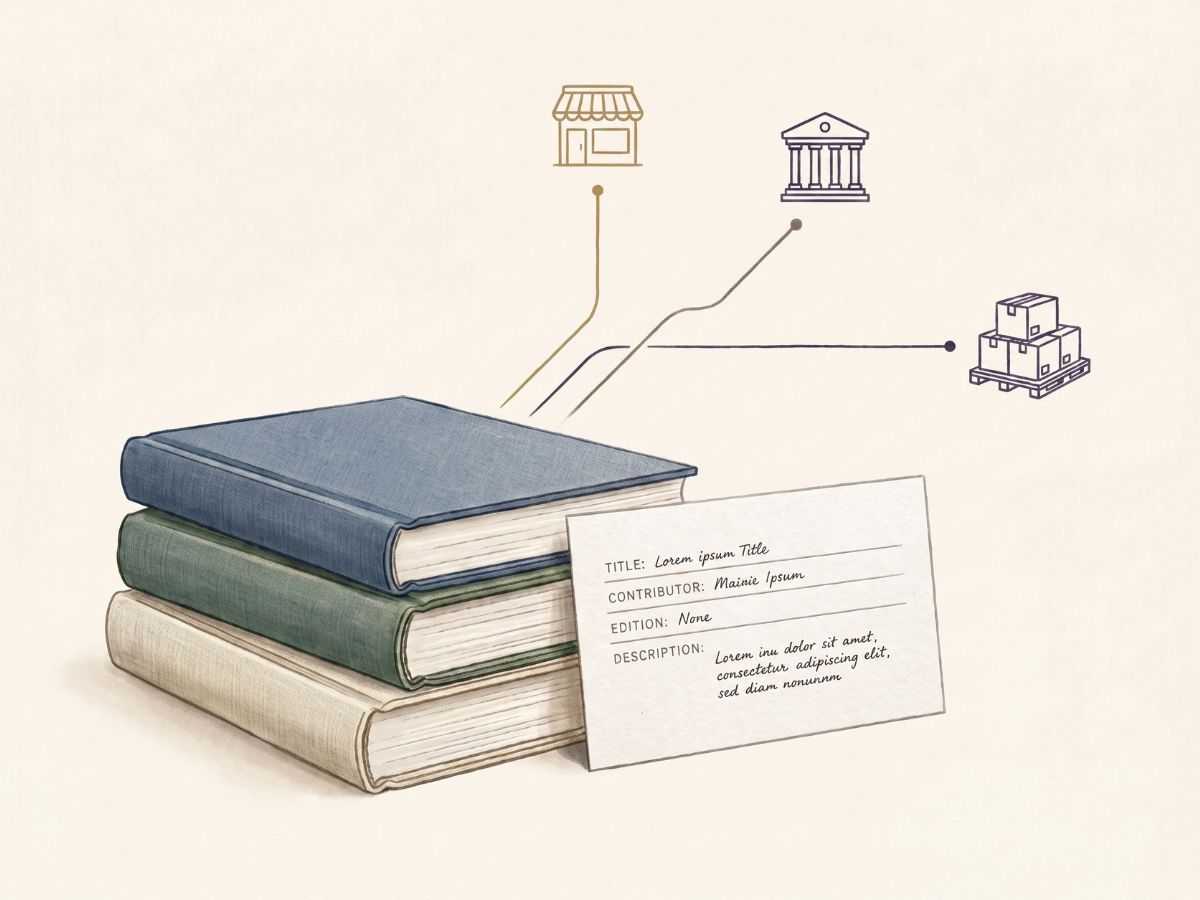
Incomplete or fragmented records can delay channel ingestion, cause broken search listings, and obscure relationships between print, digital, and translated editions.


Incomplete Data Records

Missing ISBN identifiers, contributor roles, publication dates, or pricing currencies can cause channel rejection or incomplete store listings.


Unlinked Format Editions

Conflicting title details or unlinked ISBNs make related print, e-book, and audiobook editions appear separately rather than grouped on retail pages.


Improper Categorization

Outdated or inaccurate BISAC, Thema, or BIC subject codes make it difficult for booksellers, librarians, and readers to locate specialized titles.


Fragmented Update Friction

Modifications to prices, rights parameters, or descriptions become difficult to manage when title records are scattered across disconnected systems.


CORE METADATA AUDIT

The information we audit and structure

Effective metadata depends on accurate, standardized ONIX data records across every format, language edition, and distribution channel.


Titles & Identifiers

Title statements, subtitles, series titles, volume numbering, edition statements, and ISBN associations distinguishing each format.


Contributor Records

Standardized names, contributor roles (author, translator, editor, narrator), and biographies across active title records.


Descriptive Text

Clear short and main descriptions explaining the book’s subject matter, audience appeal, and unique editorial scope.


Subject Classification

Accurate BISAC, Thema, and BIC subject coding alongside audience codes that position the work correctly in trade catalogues.


Rights & Market Pricing

Territorial availability parameters, sales rights statements, multi-currency retail pricing, and discount structure data.


Cross-Format Linking

Linked record structures connecting print paperback, hardcover, e-book, audiobook, and translated editions.


OPERATIONAL ADVANTAGES

Stronger foundations for catalogue oversight

Accurate bibliographic data supports clean retail listings, efficient catalogue administration, and reliable channel distribution.


Standardised ONIX Records

Unified title, contributor, and format data structured to industry-standard ONIX 3.0 guidelines.


Clear Catalogue Oversight

Dependable title data for sales sheets, internal catalogue management, and channel communications.


Reduced Ingestion Friction

Complete bibliographic data reduces data validation rejections and delays on receiving retail systems.


Edition Alignment

Aligned relationships between print, e-book, audiobook, and translated language editions.


METADATA WORKFLOW

How metadata is audited and prepared

Title records are evaluated according to formats, contributors, rights parameters, and selected distribution channels before data feeds are finalized.


Initial Audit

We review available title lists, ISBN assignments, and existing bibliographic data to evaluate catalogue completeness.


Gap Assessment

Missing data fields, conflicting contributor credits, and unlinked format relationships are identified for correction.


Text Refinement

Short and main title descriptions are refined to present the work clearly and accurately without overstating claims.


Subject Classification

Appropriate BISAC, Thema, and BIC subject codes are selected to align the title with trade category standards.


Publisher Approval

Audited title records are shared with the publisher for verification of contributor credits, rights, and pricing.


Channel Distribution

Finalized metadata is structured into ONIX feeds required for distribution across print, digital, and library routes.


DATA READINESS

Materials required to begin a metadata audit

The review begins with existing title data. Where records are incomplete, FKB identifies missing fields that require confirmation.


01

Active title list with assigned ISBNs, format types, and edition versions.


02

Contributor names, role designations, and available author biographies.


03

Existing book descriptions, subject keywords, and target audience data.


04

Territorial rights parameters, currency pricing, and publication dates.


05

High-resolution cover art files and interior sample proofs.


CONNECTED SERVICES

Connect metadata with the wider publishing workflow

Metadata preparation operates most effectively when aligned with planned formats, rights, and distribution routes.


METADATA QUESTIONS

Frequently asked questions

Practical answers regarding metadata auditing, catalogue preparation, and data feed standards.

Metadata should be audited whenever a title is newly published, reissued, translated, released in an additional format, or introduced to a new international market. Existing records should also be updated when prices, rights parameters, contributor details, or descriptions change.

ISBNs may be supplied directly by the publisher or arranged via FKB, depending on the publishing and distribution model agreed for the project.

Yes. Bibliographic metadata records are prepared according to industry-standard ONIX 3.0 specifications, including BISAC, Thema, and BIC subject categorization for trade distribution channels.

FKB can audit inconsistent records, prepare corrected data feeds, and submit metadata updates across distribution channels. Update ingestion timing depends on receiving retailer and platform systems.

No. The goal of metadata refinement is to ensure title records are complete, compliant, and accurate across global distribution feeds. FKB improves data quality and classification structure, but does not guarantee search rankings or sales volume.

Timelines depend on catalogue size, current record completeness, format complexity, and how quickly missing data fields can be supplied or verified. A project timeline is confirmed following the initial catalogue review.


AUDIT YOUR CATALOGUE METADATA

Ready to audit and refine your title records?

Share your title list, format specifications, languages, and existing records so we can identify data gaps and areas for bibliographic refinement.